Kettle Springs’ post-massacre recovery
Clown in a CornfieldKettle Springs’ post-massacre recovery is a struggle over who gets to define the town’s future: the conspirators who claimed to be saving it by eliminating a generation, or the young people and residents who remain to rebuild it. The attack leaves the town grievously diminished, but its intended purge fails. In the aftermath, Quinn Maybrook persuades her father to stay, students return to school, and residents begin changing the town’s public spaces. Recovery is neither a clean return to the past nor an uncomplicated triumph; it takes shape amid trauma, arrests, unwanted publicity, and a fragile renewal of local life.
The Crisis Behind the Conspiracy
Before the massacre, Sheriff George Dunne described Kettle Springs as a town losing population and purpose. He invoked the death of Arthur Hill’s child and the burning of Arthur’s factory, arguing that Arthur no longer had reason to invest emotionally or financially in the community. Dunne tied that economic and personal loss to a complaint about young people who, in his view, had no regard for the town’s history or heritage. His diagnosis made decline sound like a conflict between generations rather than a set of hardships that could be addressed without violence.
The slogan Make Kettle Springs Great Again condensed that appeal into a promise of restoration. At a meeting, Dunne urged the community to stop waiting for rescue and to take action to bring the town back to what he called its former decency. His speech helped set up Harlan Jaffers’s announcement that action would begin with the Founder’s Day parade. The applause that followed was directed principally at Dunne’s appeal, not at the parade itself, showing how the language of civic renewal could build support before its violent purpose was disclosed.
Dunne later explained the conspiracy’s underlying logic to Cole Hill. He described Cole and his friends as a blighted crop, treating young people as a contaminant that had to be cut out, culled, or burned so the land could recover. He dismissed possible causes such as phones, the internet, music, and social media as secondary to the outcome he wanted: the removal of a generation. The Kettle Springs Improvement Society had gathered supporters over months, withholding the full plan from some of them; even Dr. Weller, once a vocal supporter, became a threat when he considered exposing it. Dunne said the Founder’s Day prank convinced members that they needed to act quickly. The recovery that follows therefore answers not only the physical attack but also the conspirators’ claim that the town could be saved only by destroying its young people.
Loss, Staying, and Return
The scale of the aftermath is stark. About 20 percent of Kettle Springs’s population is dead, headed to prison, or has moved away. Yet Quinn, in the immediate aftermath, persuades her father not to leave. She believes retreat would concede the town to the people who spilled blood there; for her, staying makes the place a home defended through loss rather than a location abandoned to the attackers.
That resolve does not mean the violence has passed without lasting effects. Quinn’s hands sometimes shake, and she keeps lights on around the house. Her dreams remain terrible, as they had been since her mother’s death, and the attack adds another source of trauma rather than erasing the earlier grief. The story presents recovery as life continuing with these changes still present: Quinn can insist that the family stay while also showing that survival has altered how she lives.
School resumes at the beginning of December. Around twenty returning students had been at the Tillerson B-field party; most survived being locked in the barn and escaped into the corn before the clown reinforcements arrived. Another fifteen or so students from Kettle Springs High School had not attended the party at all. Their return matters in the terms of the conspirators’ own metaphor: the supposed crop has not been culled. Quinn takes comfort in the persistence of the young people, including those who survived the attack and those who were elsewhere that night.
Arrests and an Unintended Revival
The conspirators’ effort to preserve Kettle Springs produces consequences opposite to those they intended. Arthur Hill and Dunne’s plan, involving twelve conspirators known to the Federal Bureau of Investigation, does not save the town through the elimination of its youth. Instead, the attack brings a concentrated wave of outside attention. Television news crews, state and federal law enforcement, and true-crime documentarians arrive; their need for accommodation and meals gives local businesses a months-long boost. A town whose decline had been used to justify the plot experiences an unexpected economic lift because of the investigation and its publicity.
The same modern systems that the conspirators distrusted help expose them. After the Federal Bureau of Investigation arrives, investigators use Arthur Hill’s phone records, emails from the sheriff’s office, and location data from phones that had attended Kettle Springs Improvement Society meetings. The questioning and arrests leave no accomplice able to hide. Quinn sees the irony plainly: phones and records associated with the technology the conspirators despised help identify their members. Their secrecy is undone through evidence generated by the very tools they regarded as part of the problem.
Public attention has mixed effects. Quinn declines repeated offers to discuss her experience on camera, preserving her choice not to make her trauma a public story. Cole Hill and Ruston Vance, by contrast, agree to an interview together for a planned three-part miniseries that has already been presold to Netflix. Some residents bristle at the outsiders’ presence, while most appreciate them. The attention therefore helps local businesses without making the town’s relationship to its own tragedy uniform or uncomplicated.
Reclaiming the Town’s Public Face
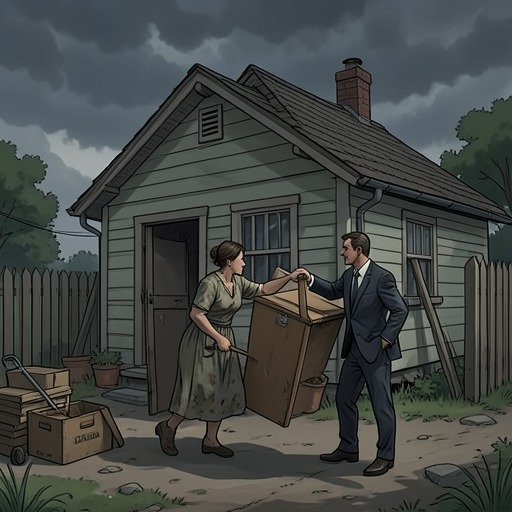
The changing appearance of Kettle Springs offers a visible measure of recovery. Businesses quickly remove Frendo-themed window displays, while residents use white paint and power-washers to strip the clown from murals and signage. These actions do not erase what happened; they reverse the imagery associated with the attackers and mark a choice about what the town will display after the massacre.
The Eureka Theater offers a more constructive emblem of repair. Under new management, it is being restored, and someone has fixed the marquee so that all its letters light rather than only the E, K, and A. Ruston Vance helps with the restoration after school. Quinn notices the working sign from the diner on Main Street and remarks that the theater seems close to opening. Its repair is concrete and collective: after the town’s public image has been shaped by Frendo, residents are preparing a shared place for ordinary life and entertainment again.
Kettle Springs does not return to its previous population or escape its losses, and the ending does not suggest that trauma has vanished. Instead, it shows renewal through continued presence: students return, the conspiracy is exposed, businesses receive an unexpected influx of customers, and people remove the attackers’ symbols while repairing a local institution. The central reversal is that the conspirators’ attempt to rescue the town by destroying its youth fails; the people they targeted remain part of the town’s future.